
If you are trying to choose between the iPhone 15 and iPhone 16, you are probably asking one of two questions. Either “is the newer one actually worth the extra money?” or “am I missing out on anything important if I go for the 15?” Both are totally fair things to wonder, and the answer is, it depends on what you actually use your phone for.
These two phones are more similar than they are different. Same size, same screen, same build quality, same Dynamic Island. But the gap between them is not nothing either. There are a handful of changes that will genuinely matter to some people and mean very little to others. Here is a proper look at what those changes actually are.
Quick Comparison: iPhone 15 vs iPhone 16
| iPhone 15 | iPhone 16 | |
| Released | 2023 | 2024 |
| Chip | A16 Bionic | A18 |
| Display | 6.1in OLED, 460ppi | 6.1in OLED, 460ppi |
| Main camera | 48MP, f/1.6 | 48MP Fusion, f/1.6 |
| Ultra Wide | 12MP, f/2.4 | 12MP, f/2.2 (with macro) |
| Camera Control | No | Yes |
| Action Button | No | Yes |
| Apple Intelligence | No | Yes |
| Spatial video | No | Yes |
| Wi-Fi | Wi-Fi 6 | Wi-Fi 7 |
| MagSafe charging | Up to 15W | Up to 25W |
| Battery (video) | Up to 20 hours | Up to 22 hours |
| IP rating | IP68 | IP68 |
Design and Build
Pick up both phones and you will struggle to tell them apart. They are the same height, width, and depth, weigh within a gram of each other, and both have that satisfying aluminium frame with colour infused glass on the back. Both also have Ceramic Shield on the front, though it is worth noting Apple upgraded to a newer generation of Ceramic Shield on the iPhone 16, which it claims is tougher than any smartphone glass available. In day to day use you are unlikely to notice the difference, but if you are prone to dropping your phone it is a small reassurance.
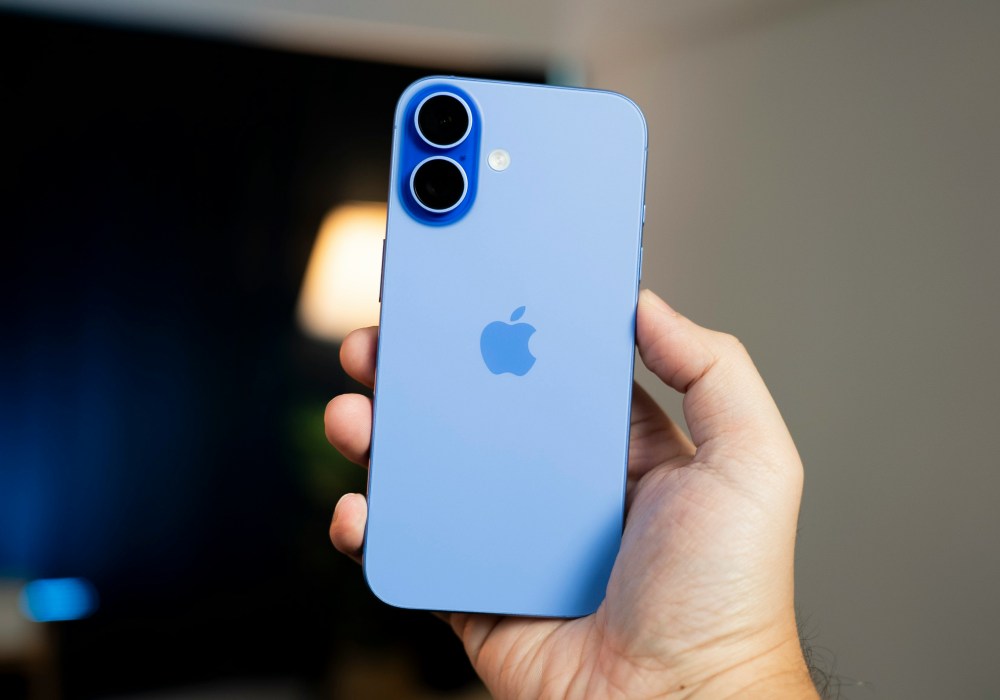
The iPhone 16 also comes in a new set of colours, Black, White, Pink, Teal, and Ultramarine. The Teal and Ultramarine in particular are noticeably more vibrant than what the iPhone 15 offered, and it is one of those things you either care about a lot or not at all.
The two physical differences you will notice are the Action Button and the Camera Control. The Action Button sits where the mute switch used to be and you can set it to do basically whatever you want, launch the camera, turn on the torch, trigger a shortcut, or activate Visual Intelligence. It sounds like a small thing but once you have a shortcut you actually use mapped to it, it becomes one of those features you wonder how you lived without. The Camera Control is a separate button on the right side that lets you adjust zoom and exposure through the hardware rather than tapping around on the screen. Useful if you take a lot of photos, less so if you do not.
The iPhone 15 keeps the classic physical mute switch, which plenty of people actually prefer. If you are someone who flips it to silent ten times a day without thinking, you might actually miss the simplicity of it.
Display
Genuinely no difference here worth worrying about. Both screens are 6.1 inch OLED panels, both run at 460ppi, both hit 2,000 nits of peak brightness outdoors, and both support True Tone and Wide Colour. You could put them side by side and not tell them apart from the display alone.
Neither of these phones has the 120Hz ProMotion refresh rate. That is a Pro model exclusive for both generations. If super smooth scrolling is something you really want, you are looking at the iPhone 15 Pro or iPhone 16 Pro rather than either of these. For the vast majority of people though, the display on both is genuinely great.
Camera
On the surface the cameras look almost identical, and for most shots they really are. Both have a 48MP main sensor with f/1.6 aperture, both give you Portrait mode, Night mode, and Photographic Styles, and both shoot 4K video at up to 60fps. If you are taking photos of your dog, your mates on a night out, or a holiday sunset, either phone will do it justice.
Where the iPhone 16 pulls ahead is on the Ultra Wide. Apple upgraded it with autofocus, which might sound dry until you realise that it unlocks macro photography. Macro lets you get incredibly close to something, a flower, a piece of food, the texture of a surface, and still get a genuinely sharp, detailed shot. It is the kind of thing that once you try it you find yourself using it more than you expected. The aperture also improved slightly from f/2.4 to f/2.2, so low light Ultra Wide shots have a little more to work with.
The iPhone 15’s Ultra Wide is fixed focus and does not do macro. For everyday shooting that will never bother you, but if you are someone who loves getting creative with close up shots, it is worth knowing.
The iPhone 16 also adds spatial video recording at 1080p, which lets you capture footage that can be viewed in 3D on an Apple Vision Pro. It is a niche feature right now given how few people own a Vision Pro, but it is the only standard iPhone that can do it.
Video recording on the iPhone 16 also benefits from two audio improvements that did not make it into the 15: wind noise reduction and Audio Mix. Wind noise reduction does what it says on the tin, which anyone who has tried to record outdoor video on a breezy day will appreciate. Audio Mix lets you adjust how much background noise is included in your recording after the fact. Small additions, but genuinely useful for anyone who records a lot of video content.
Performance
The iPhone 15 has the A16 Bionic, which is the same chip Apple put in the iPhone 14 Pro. That tells you everything you need to know about how capable it is. It is not a budget chip, it is not slow, and it is not going to struggle. Apps open fast, games run well, and it handles everything most people actually do on a phone without breaking a sweat.
The iPhone 16 upgrades to the A18, and the performance jump is more significant than a typical year on year chip update. Apple’s own figures put the A18 at around 30% faster CPU performance and 40% faster GPU performance compared to the A16 Bionic. That is a meaningful gap, especially for gaming. The A18’s GPU also supports hardware accelerated ray tracing, a rendering technique used by modern mobile games to make lighting look significantly more realistic. If you use your phone for gaming at all, that is a genuine upgrade.
In everyday use like browsing, messaging, and streaming, you probably will not feel that difference. But it does mean the iPhone 16 has more headroom as apps and games get more demanding over the next few years, and the extra performance headroom is part of why the iPhone 15 is likely to feel its age slightly sooner. The A18 also supports Apple Intelligence features that the A16 simply cannot run.
Apple Intelligence
This is the big one. If there is a single reason to choose the iPhone 16 over the iPhone 15, this is it.
Apple Intelligence is Apple’s on device AI system and it only works on the iPhone 16 and later (and the iPhone 15 Pro). The iPhone 15 does not support it, and that will never change.
What does that actually mean in practice? Things like Writing Tools, which can rewrite, summarise, or proofread text for you inside any app. Clean Up in Photos, which lets you remove a random stranger or a bin bag from the background of an otherwise great shot. A smarter version of Siri that can actually do things across your apps rather than just answering questions. Smarter notification summaries so your lock screen is not a wall of noise. And with more recent updates, ChatGPT integration in Siri and on device AI image generation.
Apple Intelligence is still being rolled out and not every feature is live yet, and it’s dramatically different to the videos it was announced with, however, Apple has made clear it is the direction everything is heading, and the iPhone 16 is built for it while the iPhone 15 is not. If you buy the 15 today knowing that, you are making a fully informed decision. If AI tools genuinely excite you, the 16 is the one to go for between the two!
Battery Life
Two extra hours of video playback on the iPhone 16 is the headline figure, and in real use that tends to translate to getting through a long day without the anxiety of watching your percentage drop through the afternoon. Not a night and day difference, but a real one.
The charging improvement is more noticeable. The iPhone 16 supports MagSafe up to 25W versus 15W on the iPhone 15, which means if you are someone who drops their phone on a MagSafe pad while you make a coffee, the 16 is going to be significantly further along by the time you pick it back up. Both phones will fast charge to about 50% in 30 minutes via USB-C with a 20W adapter or higher, and neither includes a charger in the box.
Connectivity
Wi-Fi 7 on the iPhone 16 versus Wi-Fi 6 on the iPhone 15 is one of those specs that sounds exciting but honestly will not change much for most people right now, because it requires a Wi-Fi 7 router to make a difference. If your home router is a few years old, you are not going to notice anything. It does mean the iPhone 16 is better placed for when Wi-Fi 7 becomes more common, but this is not a reason to choose one over the other today.
Both phones have 5G, Bluetooth 5.3, NFC, and dual SIM support.
What is the Same on Both Phones?
For all the differences listed above, it is easy to forget just how much these phones share. The screen is the same. The IP68 water resistance is the same. Face ID is the same. MagSafe compatibility is the same. Storage options are the same, 128GB, 256GB, or 512GB. Both have the Dynamic Island. Both use USB-C. Both have Emergency SOS via satellite and Crash Detection.
If someone handed you either of these phones to use for a week, you would have a great experience. The gap between them is real but it is not enormous, and the right choice genuinely comes down to what features you actually care about.
So Which One Should You Go For?
Go for the iPhone 16 if you are excited about Apple Intelligence and want access to it as it keeps developing. If you love photography and would get genuine use out of macro shots, spatial video, or the Camera Control button. If you game on your phone and want the performance and ray tracing support of the A18. If you use MagSafe and faster charging would improve your day. Or if you are upgrading from an iPhone 12 or older and want to land on the most future proof standard iPhone available right now.
Go for the iPhone 15 if you want a seriously capable iPhone at a more accessible price and you are not fussed about AI features. If your priority is taking great photos without needing the extra camera tricks. If you are making a practical, value focused choice and would rather put the saving towards something else. The iPhone 15 is not a step back. It is still a brilliant phone and will be for years.
Frequently Asked Questions
Is the iPhone 16 worth upgrading to from the iPhone 15?
If you already have the iPhone 15, the upgrade is hard to justify unless Apple Intelligence is important to you or you specifically want the Camera Control and macro camera. The day to day experience is very similar. If you are choosing between the two as a fresh purchase, the price difference often tips it.
Does the iPhone 15 support Apple Intelligence?
No. Apple Intelligence requires the A17 Pro chip or later. The iPhone 15 uses the A16 Bionic so it is not compatible. You need the iPhone 15 Pro, iPhone 16, or a newer model to use Apple Intelligence features.
Are the iPhone 15 and iPhone 16 the same size?
Yes, they are essentially identical in size. The exact same dimensions with 1 gram difference in weight. It’s worth knowing though, most cases made for the iPhone 15 will not fit the iPhone 16 because of the Camera Control button placement.
What chip does the iPhone 15 have compared to the iPhone 16?
The iPhone 15 has the A16 Bionic and the iPhone 16 has the A18. Apple’s own benchmarks put the A18 at roughly 30% faster CPU and 40% faster GPU than the A16 Bionic. Both are more than capable for everyday use, but the A18 has noticeably more headroom for gaming, demanding tasks, and Apple Intelligence.
Do the iPhone 15 and iPhone 16 both have USB-C?
Yes, both use USB-C. Apple dropped Lightning with the iPhone 15 generation. Transfer speeds on both are USB 2, up to 480Mb/s. If you need faster wired transfer speeds, that is a Pro model feature.
Is the iPhone 16 camera much better than the iPhone 15?
Not dramatically for most people. The main camera is very similar on both. The iPhone 16’s Ultra Wide adds autofocus and macro capability, Camera Control gives more physical control over camera settings, and there are added video features like wind noise reduction, Audio Mix, and spatial video recording. If you are not specifically after those features, real world photo quality is comparable between the two.
Can the iPhone 15 record spatial video?
No. Spatial video recording is exclusive to the iPhone 16 and later among standard models. It lets you capture footage viewable in 3D on Apple Vision Pro.
Both phones are available refurbished at The iOutlet, fully tested and backed by a 12 month warranty. Take a look at our refurbished iPhone 15 and refurbished iPhone 16 ranges and find the one that fits what you are actually looking for.